
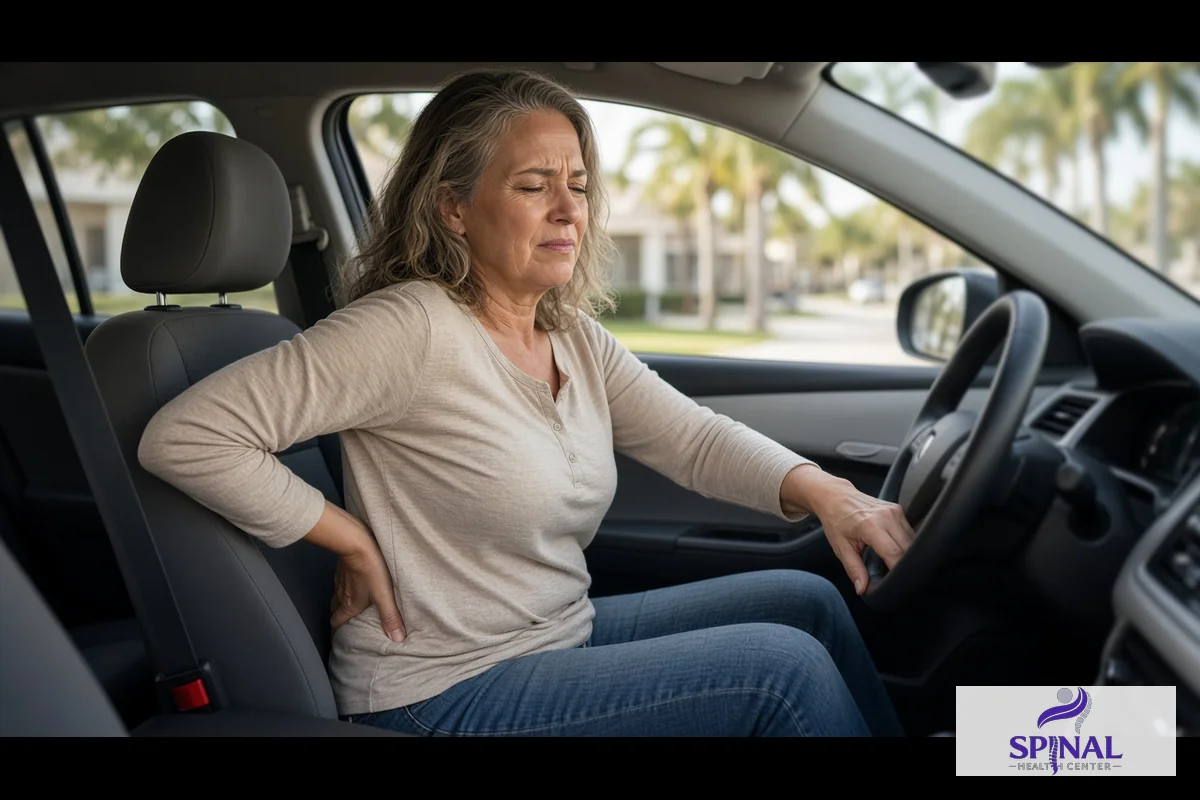
Why Does My Leg Hurt After a Long Drive to Vero Beach?
Understanding Sciatica Pain After Long Car Rides on the Treasure Coast
"I felt fine when I left… and by the time I got to Florida, my leg was on fire."
We hear a version of that almost every fall at Spinal Health Center. As snowbirds and weekend travelers pour into Vero Beach, sciatica pain Vero Beach patients often walk in describing the same pattern: a stiff low back after hours in the car, then a sharp or buzzing ache down one hip, thigh, or calf that makes standing up feel like a negotiation.
If a long drive left you limping into the store or stretching in rest-area parking lots, your spine and sciatic nerve are asking for attention. The good news: most driving-related sciatica responds well to simple travel habits and conservative chiropractic care.
What Sciatica Feels Like After Sitting in the Car
Sciatica is not a diagnosis by itself. It is a pattern of nerve irritation that often starts in the low back or pelvis and follows the sciatic nerve into the hip and leg. After a long car ride, people commonly notice:
- Low-back stiffness that eases a little once you walk, then returns when you sit again
- Pain in one buttock or hip that can feel deep, tight, or bruised
- A burning, buzzing, or electric sensation down the back or side of the thigh
- Calf tightness or foot tingling after getting out of the car
- Trouble standing fully upright for the first few minutes at a rest stop
Those symptoms can show up after an interstate trip from up north, a day of Treasure Coast traffic, or even shorter drives if your low back was already irritated.
Why Long Car Rides Aggravate Sciatica Pain in Vero Beach
Your lumbar spine and pelvis are not designed to stay locked in one seat angle for five to fifteen hours. When they do, several things stack up:
- Sustained flexion — a rounded low back flattens the natural lumbar curve and can load the discs and joints
- Hip-flexor tightness — sitting shortens the front of the hips and changes how the pelvis sits under the spine
- One-sided habits — wallet in a back pocket, always leaning on the center console, or a seat that tilts you slightly
- Vibration and micro-jolts from the road that the spine has to absorb without much movement
- Dehydration and fewer position changes — both make soft tissues less forgiving by mile 300
By the time you arrive in Vero Beach, the joints may feel "stuck," the muscles stay guarded, and the sciatic nerve has less tolerance for stretch. That is why getting out of the car can feel worse than the drive itself.
How Chiropractic Care Can Help
At Spinal Health Center, we do not treat post-drive leg pain as "just a stiff back from sitting." We look at how your lumbar joints move, how your pelvis and hips share the load, and whether nerve tension is feeding the symptoms that show up when you stand or walk.
When spinal or pelvic joints are restricted, muscles around the hip and hamstring often stay protective. Stretching alone then gives only short-lived relief. Gentle chiropractic adjustments can restore healthier joint motion, which may reduce muscle guarding and make it easier for the nerve to settle.
Depending on your exam findings, care for sciatica may include:
- Lumbar and pelvic adjustments to improve motion where you are stiff
- Soft-tissue work for the glutes, piriformis, and hip flexors that tighten on long drives
- Simple mobility drills you can use at rest stops and after you arrive
- Travel-setup coaching — seat angle, lumbar support, and break timing that reduce next-trip flare-ups
The same whole-body approach helps patients dealing with related back pain, hip tightness, and the slow buildup of sitting stress that does not always wait for a cross-country drive.
Practical Tips for Your Next Drive
Whether you already feel sciatica after long car rides or want to protect your back before snowbird season traffic picks up, try these habits:
- Stop every 60–90 minutes for a two- to three-minute walk, even if you "feel fine"
- Use a small lumbar roll or rolled towel at belt level so your low back does not round into the seat
- Slide the seat so your knees are slightly lower than your hips when you can, instead of sitting in a deep bucket
- Keep your wallet out of your back pocket so one side of the pelvis is not hiked for hours
- Do a gentle standing hip hinge and calf stretch at each break instead of only checking your phone
- Get checked if leg pain, numbness, or weakness lasts more than a few days after you arrive
When to See a Chiropractor
Occasional stiffness after a long trip is common. It is worth getting evaluated if sciatica pain is becoming your normal after drives, if symptoms linger into the next day, or if pain spreads farther down the leg, causes numbness, or makes walking feel unsteady. Catching joint and soft-tissue issues early is usually simpler than waiting until every car ride feels like a setback.
Seek urgent medical care right away for red-flag symptoms such as loss of bladder or bowel control, progressive leg weakness, numbness in the saddle area, fever with back pain, or pain after a significant trauma. Those situations need prompt medical evaluation, not a wait-and-see approach.
At Spinal Health Center in Vero Beach, our goal is straightforward: help you enjoy the Treasure Coast without negotiating with your leg every time you park. Whether symptoms started on I-95 or after a day of errands, chiropractic care can be part of a clear plan to restore comfort and motion.
Ready to move better after the drive? Book your appointment online at verospine.janeapp.com or call us at (772) 233-4703. We would love to help you settle into Vero Beach feeling more like yourself.